
Category: Asia


WELCOME HOME
It’s no secret that I am a fan of W Hotels. In the last 4 years alone I’ve stayed in and reviewed the W Hotels in St Petersburg, Amsterdam, Hong Kong, and Taipei; as well as hung out in the W Hotels in Barcelona and London. As I’ve said before, myself and W Hotels are an unexpected pairing given that my tastes gravitate toward the traditional and historical, but that just goes to show that their hotels are so exceptional and unique that I allow this ultra-modern, ultra-hip brand a place in my heart. I’ve been looking forward to the opening of the W Kuala Lumpur since 2015, at the launch of Tropicana Residences to where I was very kindly invited by Tan Sri Danny Tan whose Tropicana Corp owns the W KL Having waited so long for Malaysia to have its own W, I recently took up the chance to take a staycation at the shiny new W KL Will it live up to the hype? How does the W KL compare to its glitzy international cousins? Read on...
SOME PHOTOS KINDLY PROVIDED BY W KUALA LUMPUR, BECAUSE SOME AREAS OF THE HOTEL WERE TOO CROWDED TO PHOTOGRAPH.
April 11, 2019

Detox? How very wholesome...and utterly dreary, darling. I know it is oh-so-à la mode to be a beaming paragon of clean living and clean eating, but let’s be real: behind every smug “After my sunrise yoga session I had an acai and goji berry enema, now my third eye (and small intestine) has never been clearer! Namaste, b*tches!” post on social media is a hangry neurotic who’d close their chakras for a fat, juicy, cheeseburger. Deprivation is passé, moderation is key, and the occassional indulgence is essential. A monthly Retox is where it’s at, and no, you won’t even have to get up before noon. I can hear the decadence calling!
#THISISNOTASUNDAYBRUNCH
April 04, 2019

Home Away From Home: The Art of “Hostmanship” at The RuMa Hotel and Residences
Home away from home. A concept that has posed a conundrum to this native Malaysian eversince I made the fateful decision to immigrate to England over a decade ago. Having spent most of my adult life in London, my childhood stomping grounds of Kuala Lumpur are both familiar and foreign to me. I enjoy the unusual position of being able to offer insider advice on the capital city of Malaysia yet view K.L through the rose-tinted glasses of a tourist. Truly, the best of both worlds. However, if there is one donwside to having homes in both England and Malaysia (West and East Malaysia, I’ll have you know), it is that when people hit up #YipAdvisor with “Where is the best place to stay in Kuala Lumpur?” I can only reply with “My...house?” I have had no personal need to acquaint myself with the Kuala Lumpur hotel scene, and besides, what hotel can live up to the comforts of home?
March 26, 2019

atas:
(MALAY)
1. adverb, preposition: above
2. adverb, adjective, noun: upstairs
3. colloquial: upper-class, high-class
Eg: “She’s so atas, her phone contacts read like The Tatler 300 List*.”
*DID THAT GO OVER (I MEAN, ATAS) YOUR HEAD? I’M SORRY, I TRIED.
For too long, the phrase ‘atas’ has been thrown around by pressed Malaysians and Singaporeans to denote snobbery. Reverse snobbery, how quaint: I can relate. The struggle is real. Fortunately, The RuMa Hotel and Residences seeks to reclaim the word ‘atas’ by offering an elevated dining experience at their slick yet surprisingly accessible mezzanine-level (see what they did there?) restaurant Atas Modern Malaysian Eatery. Up, up, and beyond...
March 11, 2019
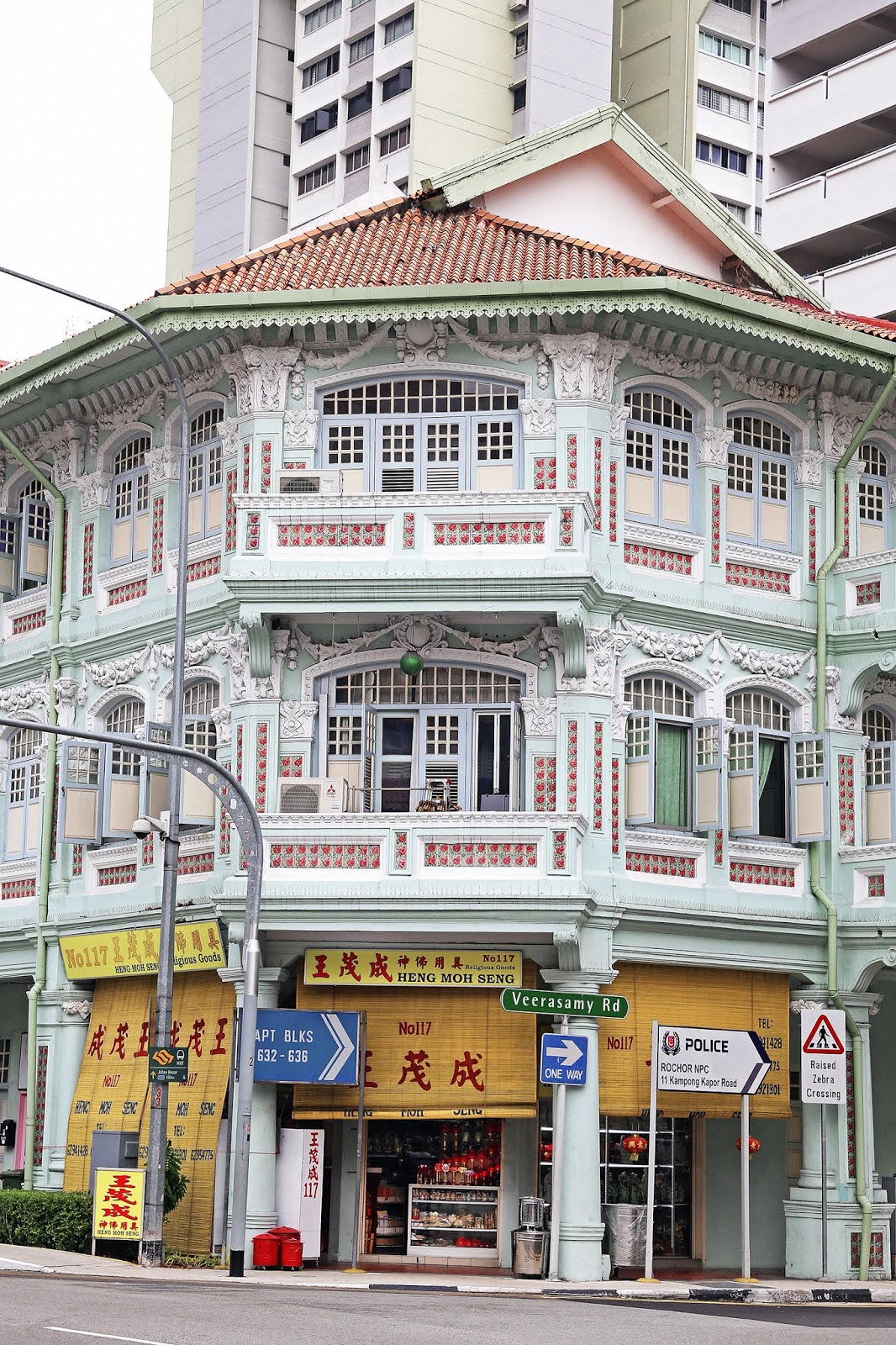
10 THINGS TO SEE, DO, & VISIT IN SINGAPORE: A GUIDE BY A REAL-LIFE CRAZY RICH ASIAN
You would’ve read from my previous story about my identity, heritage, and upbringing that I’ve spent much of my childhood in Singapore. The ‘Little Red Dot’ on the world map that has been brought to wider attention thanks to the blockbuster Crazy Rich Asians (cue: “I prefered the book, and mine’s the 1st Edition, darling”). Even to a semi-local like me, Singapore is an enigma wrapped in a mystery. To start with: its juxtaposition of futuristic skyscrapers and architectural styles ranging from classical Chinese to British colonial. Some consider Singapore to be sterile; I prefer to call it a safe, sanitised, and condensed version of some of Asia’s best quirks. A highlights reel, if you may. In that spirit, here is my insider’s guide to this unique country and how to get a feel for Singapore’s culture and history. And you don’t even need to be a CRA, because I’m thoughtful like that, sweetie darling!
February 01, 2019

Malaysian by nationality, Chinese by ethnicity and heritage, Brit by circumstance; by way of Kuala Lumpur, Singapore and London. 🇲🇾 + 🇸🇬 + 🇦🇺 + 🇬🇧 = ? In which I spill the (oolong) tea about my identity, my heritage, and the distinctions of different Chinese groups (from the Mainland to Overseas) against a pastel-pretty historical street that formed part of the backdrop of my childhood in Singapore.🇸🇬🇸🇬🇸🇬
January 17, 2019

BORED IN BRUNEI: STRANDED IN BANDAR SERI BEGAWAN, THE CAPITAL “THE MOST BORING COUNTRY IN SOUTH EAST ASIA” (MAYBE EVEN THE WORLD)
“Why...” my step-grandfather frowned quizzically, “...would you want to go to Brunei?” Coming from an expert on Borneo (Malaysian, Indonesian, and Bruneian - here’s a photo of him as a schoolboy giving The Duke of Edinburgh the lowdown on Bornean industry), this was not encouraging. “Well,” I explained, “My mission for this year is to visit all the countries of South East Asia that I haven’t yet, and I thought Brunei would be the easiest since it’s only an hour flight from here.” We were in Kota Kinabalu, one of the two East Malaysian states that comprises North Borneo. “Besides,” I continued, “I know there’s not that much to see, so I’ll just be making a day trip to Bandar Seri Begawan...” My Uncle Robert snickered, “That’s one day too many.” I ignored him: “...I’ll have more than enough time to see the capital’s highlights and be back in time for dinner.”
Or so I thought. You know the saying “The road to hell is paved with good intentions?” Well, despite my best of intentions to debunk Brunei’s reputation as The Most Boring Country in South East Asia; despite my research, preparation, and aptitude at speaking the language, I would find myself trapped in purgatory thanks to a series of unfortunate events. So much so that I was traumatised by my day trip to Bandar Seri Begawan and hadn’t touched these photos in 5 months. Well, it’s time to crack open Pandora’s Box. I shall tell you my story, or rather, cautionary tale. So many questions to be asked! Is Brunei really a dry country? Does B.S.B - the abbreviation for Bandar Seri Begawan - actually stand for Boring, So Boring...? Is this what it sounds like when doves cry? Read on...
September 24, 2018

Beyond the sea: There's more to BUSAN, SOUTH KOREA than its beaches, as I discovered on a cold winter's day...
Busan has been lauded as South Korea’s answer to Barcelona: a coastal town with a wide beach and more urban edge than its glossy inland cousin. Beyond its seaside charms, South Korea’s second largest city would have you know that you are in ‘Dynamic Busan, City of Tomorrow’. They’re not wrong. Some parts of Busan, especially downtown, rival the modernity in Seoul, if not outstrip it’s braggadociousness (braggadocity?). I’m talking about you, We’ve The Zenith - I’m not sure what this so-called zenith is, unless it’s a reference to being the tallest residential building in the world. Busan wants to talk about its vision for the future, while visitors think of its coastal charms (seven, count ‘em, seven beach districts). Both are very worthy reasons to visit. But of my brief sojourn in Busan, two things stood out the most to me; one of which was a pristine relic of its past, the other a exemplary case of urban regeneration done right. There is more to Busan than its beaches, as you’ll see (sea?)...
September 20, 2018

I'm an Old Soul living in this strange world...The 3 Places in Seoul to See the Traditional Side of South Korea
A field of LED roses beside the Zaha Hadid-designed plaza in Dongdaemun. Shopping for skincare infused with snail secretion, starfish, seahorse (or whatever animal ingredient is in vogue) in Myeongdong. That earworm that both satirised and introduced to the wider world the flashy, luxury district of Gangnam. Whatever you know about Seoul, the capital of South Korea; it’s likely to be trend-led, modern, and futuristic. In fact, the highlight of my visit to Seoul in 2014 was the Dior Cafe, housed in a building that resembled an oversized tooth. But there are parts of the city that still clings on to the classics, where you can get a feel for the old soul of Seoul. I visited three such places in my previous visit, last winter. Here are my 3 Places in Seoul to See the Traditional Side of South Korea.
September 17, 2018


Japan, Unexpected: With Tropical Climates, Cherry Blossoms in Winter, and a Distinct Culture to the Rest of Japan, The Island of OKINAWA is a World of Its Own
The Southwest Islands reveal a side of Japan that may not exist in the common imagination: tropical islands surrounded by azure waters and fringed with coral, teeming with hibiscus and pineapples. Okinawa means "rope in the open sea", a poetic and apt description of this chain of islands between the four main islands of Japan and Taiwan.The difference is more than skin deep - the culture of Okinawa is uniquely 'un-Japanese', for the islands were the Ryukyu Kingdom for most of their history.
The “Hawaii of Japan” has long been a exotic destination even to the Japanese: an all-year-round holiday spot for big spenders in luxury resorts, intrepid nature lovers seeking ocean adventures, and families escaping for a more relaxed pace. Okinawa is the default destination for domestic sun, sea, and sand; but even so, it’s not very accessible to Japanese as domestic flights to the prefecture can be prohibitively expensive (indeed, it cost me less time and money to fly from Taipei than it did to fly to Kyoto). I visited Okinawa twice this year - once in February and once in March - and both times I was based in the capital, Naha; but I ventured slightly further that I may have a better understanding of this island’s history, landscape, and customs. I daresay you’ll find this Japan story a contrast to my others from Kyoto and Tokyo. Without further ado, let’s jump right in...


SHURI-JO
Before there was Okinawa, there was the Ryukyu Kingdom (1429 - 1879). The centre of the kingdom was Shuri-Jo, a dazzling vermillion castle completely unique to Japan as it was greatly influenced by Chinese architecture with similarities to the Forbidden City. Ryukyuan elements also dominate; such as decorations featuring the the king’s dragon, red Ryukyuan tiles for the roof, and walls of Ryukyuan limestone. Not even the decline and devastation by the annexation of Okinawa to Japan and World War II could diminish Shuri-Jo. Historian George H. Kerr described the castle as "one of the most magnificent castle sites to be found anywhere in the world, for it commands the countryside below for miles around and looks toward distant sea horizons on every side”. Today, the reconstructed Shuri-Jo is a World Heritage Site, the 11th within Japan. Shuri-Jo is the perfect starting point to understanding the history of the islands now called Okinawa. Start from the entrance base of the hill, climb up to the inner sanctum of the castle (while taking in the view of the capital, Naha, below), and enter the Seiden (main hall) for exhibits on the castle and the Okinawan royals.


CAPE MANZAMO
One of Okinawa’s most beloved beauty spots is Cape Manzamo, a scenic rock formation near Onna Village in the Kunigami District. On his visit to Cape Manzamo, the 18th Century Ryukyuan king Sho Kei commented on the immensity of the cliff hence its name - Cape Manzamo means “A field for 10,000 people to sit”. Certainly a more dignified name than “The Toilet Bowl”, a popular scuba-diving spot in one of the tidal pools at the bottom of the rock formation. The “elephant trunk” shape of the cliff (above) was amusing enough, but that’s far more than the sum of Cape Manzamo’s parts. Even on an day with approaching storm clouds, such as when I visited; the waters were clear as could be. Layers of blue; from cyan to turquoise with white foam crashing against the coral. Cape Manzamo is one of the most popular places among both Japanese and international visitors to Okinawa, not just for its dramatic crashing waves and precipitous heights. The cliff at Cape Manzamo faces the East China Sea, making it even more picturesque during the sunset, which is when the cape is at its most crowded.

CHURAUMI AQUARIUM


OKINAWA PREFECTURAL PEACE MEMORIAL PARK & MUSEUM
As idyllic as life on Okinawa may seems, the island has suffered greatly in recent history. We all know how World War II was brought to an end, but less of us know the devastation in Japan that led up to it, which played out on Okinawa Island. The island was the site of one of the war's bloodiest battles when US forces invaded and occupied the island in a bid to reach the capital. The Imperial Japanese Army fought to hold them there to prevent them from reaching Tokyo, prolonging the battle from April to June 1945. As a result, an estimated 200,000 people (including more than 100,000 civilians and 12,500 Americans) were killed in the battle.
The main memorial to the Battle of Okinawa is the Peace Memorial Park. The "Cornerstone of Peace" (similar to the Vietnam Veterans Memorial) is a sobering and haunting sight - never ending rows of large stone plates inscribed with the countless names of all fallen soldiers and civilians. The Peace Memorial Museum is a place of education and reflection, with graphic descriptions of the Battle of Okinawa and the subsequent reconstruction of Okinawa. Not easy to swallow, but very necessary food for thought.


HIMEYURI PEACE MUSEUM
Equally if not more haunting is the Himeyuri Peace Museum, given who it commemorates. The Himeyuri Peace Museum is dedicated to the role and fate of the female high school students of the Himeyuri Student Corp - also known as the “Lily Corps” - during the Battle of Okinawa. They were a group of 222 students and 18 teachers of the Okinawa Daiichi Women's High School and Okinawa Shihan Women's School formed into a nursing unit for the Imperial Japanese Army. Mobilised on 23rd March 1945, many of the Himeyuri students thought that the Japanese army would defeat the Americans in a matter of days and would return to school, so they brought school supplies to continue their studies. The reality was that most of them would not survive the war.
During the 3-month-long battle, the students were on the front lines performing surgery, living in horrendous conditions: in dark, dank caves filled with injured and dead soldiers. A plaque sits at the opening of one such cave, which visitors enter a recreation of in claustrophobic tunnels filled with the faces of the students and their stories. The experience is especially disturbing knowing that of all the children’s faces before you, 123 out of the 222 students would not live to see the end of the war. Of the few that did, many of them helped build and maintain the Himeyuri Peace Museum, keeping the memory of these brave souls alive since April 7, 1946.
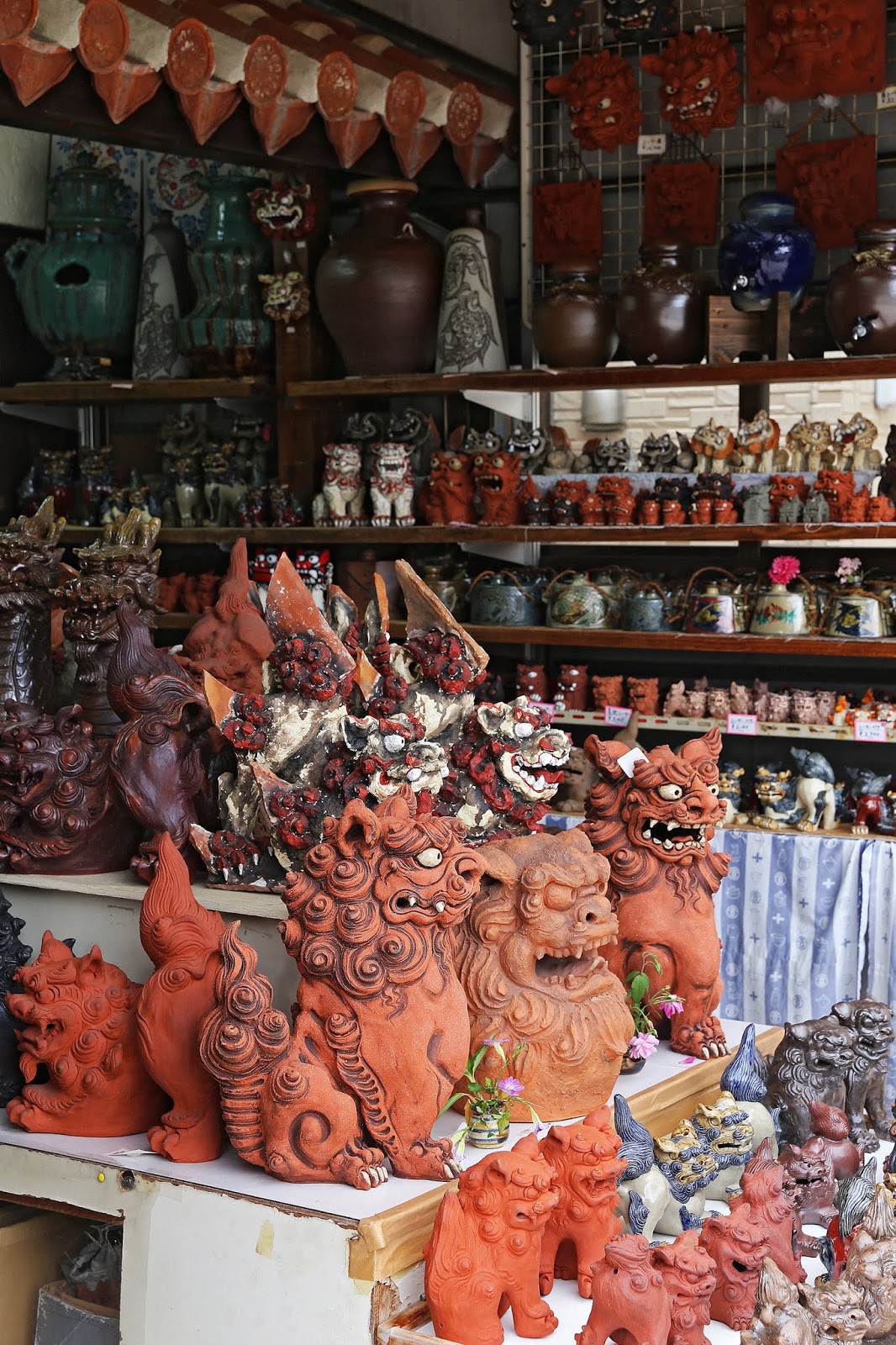
TSUBOYA POTTERY STREET


NUCHIGAFU
Take a detour off the beaten path and you’ll be rewarded with a hidden gem. Off the southern end of Tsuboya Pottery Street is an uphill path that leads to Nuchifagu. Formerly a historic Ryukyuan residence and Okinawan teahouse, Nuchifagu is now a cosy traditional restaurant surrounded by a charming garden on a hilltop. By day, Nuchifagu serves lunch and frothy buku-buku tea. Here, guests can make their own buku-buku - a traditional bubbling tea whose froth signifies "bubbling with joy" - that has been made since the time of the Ryukyu Kingdom. A lovely spot for afternoon tea. By night, Nuchifagu serves up exquisite Okinawan dinners. I had the great pleasure of enjoying a birthday dinner here; an elegant, beautifully-plated multi course dinner of both Okinawan and Japanese dishes. From seagrapes to sashimi, pork belly to wagyu beef, every course was as detailed and delicious as the last. An elegant, memorable experience; and certainly my favourite culinary moment in Okinawa.


FIRST MAKISHI PUBLIC MARKET
Okinawa had thrilled me with her unexpected offerings, but the greatest of all was yet to come....

...I saw cherry blossoms in February.

Sighting cherry blossoms in the midst of winter came as a surprise given that they are traditionally associated with spring. What I didn’t realise was that the first of Japan’s sakura season begins first in Okinawa in January, moving North and ending in Hokkaido in May. It was also strange to see such intensely-coloured flowers compared to the pastel, nearly-white pink buds commonly associated with sakura season. I later learnt that the cherry blossom trees in Okinawa are a different species than mainland Japan. These cherry trees, which resemble plum blossoms, originated in southern China and Taiwan.
What made my unexpected sighting all the more special was learning that the visibility of the cherry blossoms in Okinawa is extremely limited compared to the rest of Japan. Okinawan cherry blossom make appearances only in specific places within Naha’s city limits: the most popular are Mt Yaedake in MotobuTown, Nakijin Castle in NakijinVillage, and Nago Central Park in NagoCity. To have spotted cherry blossoms on a highway, against a backdrop of tropical foliage, in one of the coldest months of the year, before sakura season began in the rest of Japan made the chance encounter all the more precious.

I will always be grateful for Okinawa for showing me the unexpected; from her unique culture and heritage to cherry blossoms in winter. For these reasons and more, I urge you to visit and see a side of Japan you may not know exists.
September 13, 2018

Tokyo Express: 24 Hours in The World's Largest Megacity
Go, go, go! It’s no wonder that the official Tokyo city guide is called Go Tokyo. This megacity of 38 million people has a reputation of being fast, forward, and futuristic. From robot restaurants to capsule hotels (let’s not even mention Tokyo Drift), the capital of Japan is a frenetic city of skyscrapers, electric lights, and concentrated craziness. Tokyo is like the most extra of Blade Runner and Ghost In The Shell combined, with maid cafes (where doe-eyed waitresses in French maid costumes fawn over customers: “Welcome home, master!”). The future is here, and it looks like this. Having just come from Kyoto, the former imperial city and the spiritual and traditional heart of the country, Tokyo was a rapid change of pace that threw me for a loop. Even more so because I had only a full day to reacquaint myself with a city that is too fast for my tired, bootie-clad feet to keep up with. This is not a city guide, but rather my photo diary of the electricity of this insane city as well as the contrasts of its pockets of tranquility. Here are the sights I saw in my 24 Hours in Tokyo, Japan.
September 10, 2018

TOP 10 THINGS TO SEE & DO IN KYOTO, JAPAN
I can think of few cities more evocative than Kyoto. It is, in fact, my favourite city in Japan. The Japanese way of life, philosophies, and customs speak to me of ritual, mystery, and spirituality. No other city in Japan is as steeped in these as the city of Emperors. Kyoto is old Japan in modern times - where the traditional arts and crafts are kept alive by generations of artisans, and where the last remaining geisha in Japan live and work in historic districts that remain practically unchanged for centuries.
More than just the cultural capital of the country, Kyoto is also the spiritual heart of Japan - this is a city of temples and shrines, of torii gates and incense, of gods and spirits. Kyoto is the city to immerse yourself in the intricacies of Japanese culture - be it elaborate tea ceremonies, joyous hanami (cherry blossom viewing parties), or making offerings to fox statues at Shinto shrines. If you’re thinking of visiting Japan for the first time, I highly recommend you begin with Kyoto that you may understand the unique Japanese way of life. Either way, if Kyoto is new to you, I daresay I have you covered with my list of the Top 10 Things to See & Do in Kyoto, Japan.
September 06, 2018
Subscribe to:
Posts (Atom)